
 עברית
עברית
Some plants seem like gentle reminders from nature — soft, pleasant, almost invisible — yet they carry immense power for renewal.
Red Clover (Trifolium pratense) is one of them. Its pinkish-purple blossoms resemble tiny hearts, long revered as symbols of vitality and balance for body and mind.
This is a plant of cleansing, blood renewal, and deep feminine harmony.
It reminds the body how to move energy again and return to its natural strength.
History and Culture
Red Clover has been mentioned since ancient Greek medical texts and in Celtic and Irish traditions, where it symbolized abundance and good fortune.
European nuns dried its flowers to prepare healing infusions for respiratory ailments, fever, and skin conditions.
In traditional North American herbalism, Red Clover was used to cleanse the blood, strengthen women after childbirth, and support hormonal transitions.
In the 19th century, it entered American Eclectic Medicine, where it was regarded as a natural “blood purifier” that helps rebuild tissues and support the lymphatic system.
Botanical Description
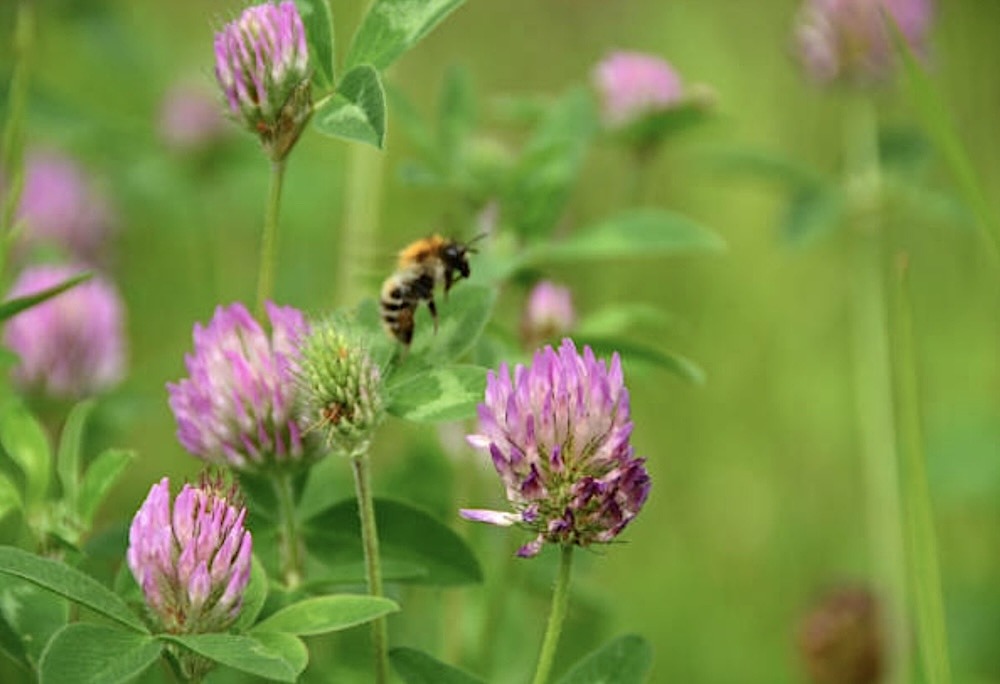
Red Clover is a perennial herb in the legume family (Fabaceae). Its trifoliate leaves bear a pale chevron in the center, and its pink or light-purple flowers form a dense globe at the top of the stem.
It grows in open meadows, pastures, and roadsides across temperate regions of Europe, Asia, and North America.
It is also one of the most important nectar plants for bees, producing dark, aromatic honey.
Nutritional and Active Compounds
Red Clover is rich in biologically active molecules with a gentle yet wide-reaching effect:
- Isoflavones – including natural phytoestrogens that modulate hormonal balance in the female body:
- Genistein – a mild estrogenic compound known for its gentle anti-cancer activity and protection of bone and heart health.
- Daidzein – another isoflavone also found in soy; helps regulate hormones and supports bone density.
- Formononetin – a characteristic Red Clover isoflavone and a biochemical precursor of Daidzein, with a calming effect on the nervous system.
- Biochanin A – a stronger antioxidant and hormone-modulating isoflavone that supports vascular and reproductive health.
- Coumarins – improve blood circulation and reduce excessive clotting.
- Phenolic acids – antioxidants that protect liver, skin, and nerve cells.
- Minerals – calcium, magnesium, iron, and zinc, which strengthen the blood and bones.
- Vitamins – A, C, and the B-complex group, supporting vitality, nervous balance, and cell regeneration.
Health Benefits and Therapeutic Effects
- Purifies the blood and supports lymphatic flow.
- Promotes female hormonal balance and relieves menopausal hot flashes.
- Strengthens bones and supports the prevention of calcium loss.
- Helps manage chronic skin conditions such as psoriasis and eczema.
- Supports respiratory health and eases dry cough.
- Reduces emotional tension and promotes a sense of inner warmth and calm.
Medicinal Uses
Many independent laboratory studies have been conducted on Red Clover worldwide:
- Small clinical trials have shown that standardized Red Clover extracts may reduce menopausal symptoms, particularly hot flashes and irritability, through the isoflavones’ effect on estrogen receptors.
- Other studies found protective effects on bone and liver cells due to its strong antioxidant activity.
- Alcoholic extracts are used in natural medicine to cleanse the blood, reduce skin inflammation, and support lymphatic detoxification.
- In European herbal medicine, Red Clover is a key ingredient in formulations for women’s vitality and is often combined with herbs like Vitex agnus-castus (Chaste Tree) and Black Cohosh for menopausal support.
Culinary Uses
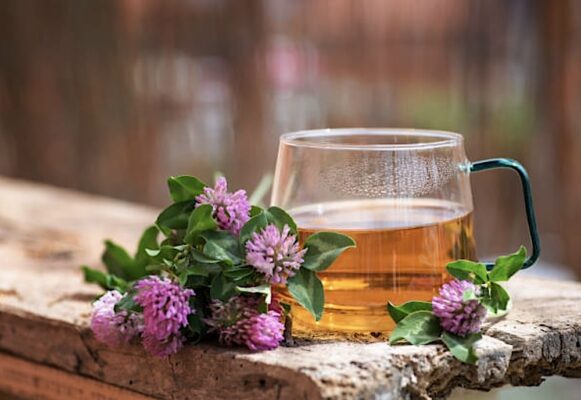
The young flowers are edible — they can be added fresh to salads or dried for herbal teas.
Steeping them in hot water with a touch of honey makes a soothing, gentle infusion for the throat and nerves.
In rural traditions, they were also used to prepare natural syrups to strengthen children during winter.
Cosmetic Uses
Red Clover extract is among the finest natural ingredients for calming sensitive or inflamed skin.
Its isoflavones help stabilize collagen fibers and maintain skin elasticity and radiance.
In hair care formulations, it strengthens the scalp and reduces hormonally related hair loss.
Use in Animals
In moderate amounts, it is generally safe for most animals, especially horses and dogs.
However, excessive use should be avoided due to its coumarin content.
Large quantities in grazing animals may lead to digestive fermentation and discomfort.
Warnings and Contraindications
- Do not use in large quantities alongside anticoagulant medications.
- Avoid during pregnancy and breastfeeding due to its hormonal activity.
- In rare cases, mild skin sensitivity may occur.
A Message of Feminine Renewal and Living Earth
Red Clover teaches us that renewal is woven into life itself.
It is not only a plant for women but a plant that restores the flowing energy of body, heart, and soul.
It reminds us that life always finds its way back to growth — even after seasons of fatigue or confusion.
Red Clover (Trifolium pratense) — Independent and Scientific Sources
Evaluation of Clinical Meaningfulness of Red Clover: a meta-analysis showing significant reduction of hot flashes in postmenopausal women.
🔗 https://pmc.ncbi.nlm.nih.gov/articles/PMC8069620/
Effects of Isoflavones from Red Clover on Skin: analysis of collagen, elastin, and signs of skin aging.
🔗 https://pubmed.ncbi.nlm.nih.gov/17078110/
Phytochemical Composition of Different Red Clover Genotypes: comparison of isoflavone concentrations in plant parts and varieties.
🔗 https://pmc.ncbi.nlm.nih.gov/articles/PMC10778848/
Evaluation of Estrogenic Activity of Red Clover: study of isoflavone interaction with estrogen receptors.
🔗 https://pubmed.ncbi.nlm.nih.gov/29287378/
Isoflavones from Red Clover Improve Systemic Arterial Compliance: showing vascular benefits after menopause.
🔗 https://pubmed.ncbi.nlm.nih.gov/10084567/
Clinical Studies of Red Clover Dietary Supplements: summary of trials on menopausal symptoms and overall well-being.
🔗 https://pubmed.ncbi.nlm.nih.gov/16645539/
Effectiveness of Commercial Red Clover: evaluation of commercial isoflavone extracts on menopausal health.
🔗 https://www.mdpi.com/1661-3821/4/3/26